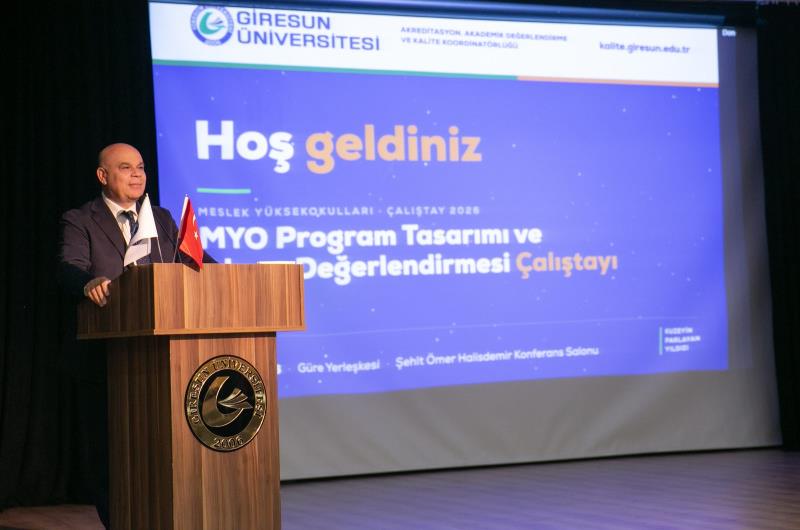
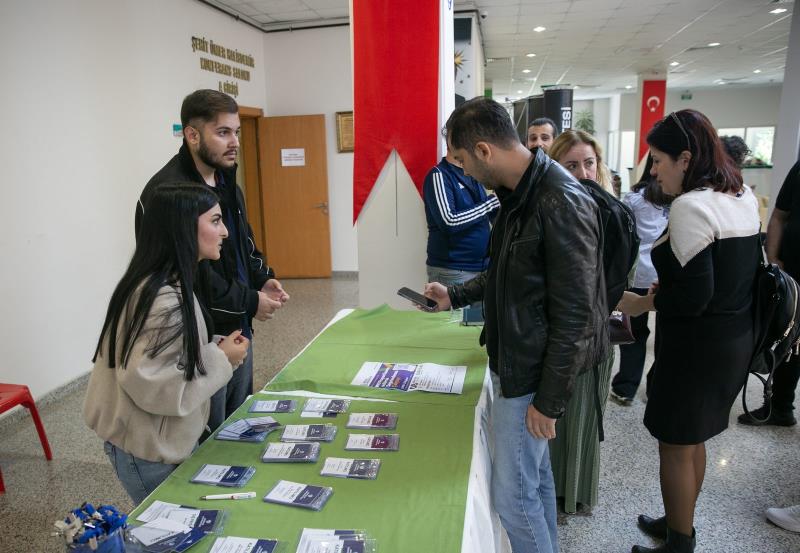
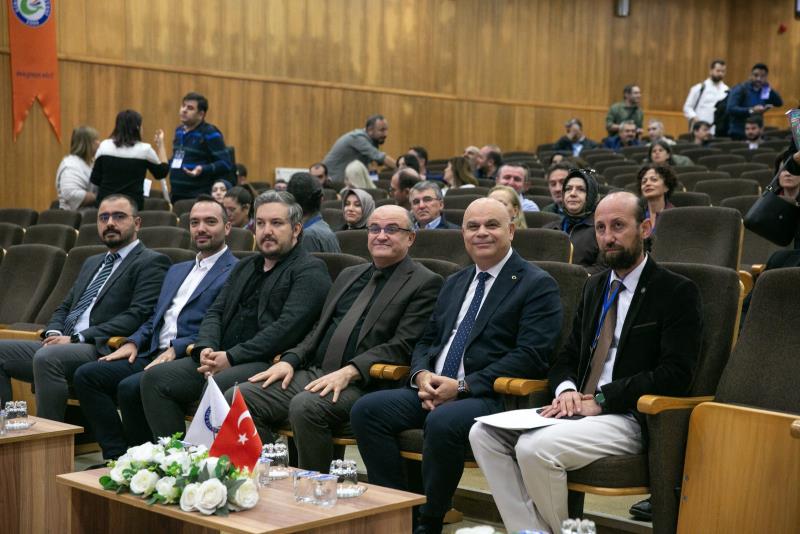
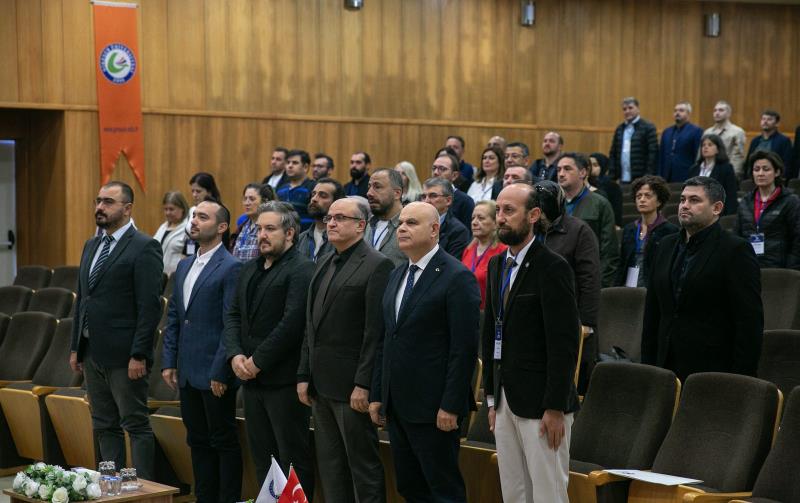
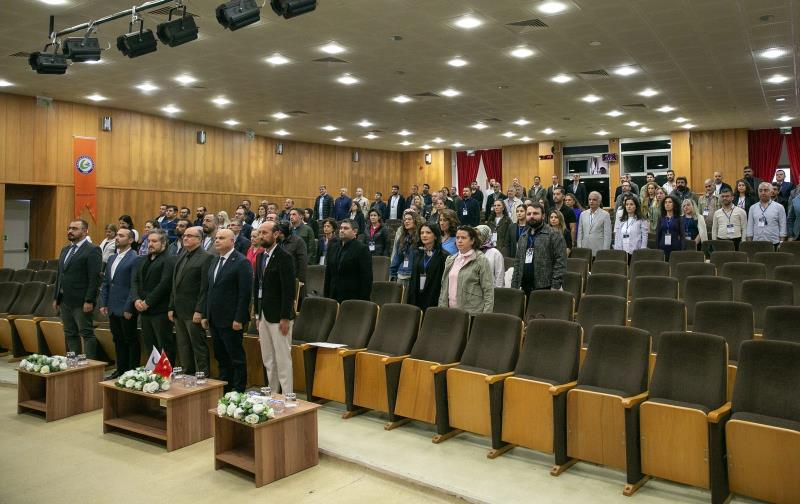
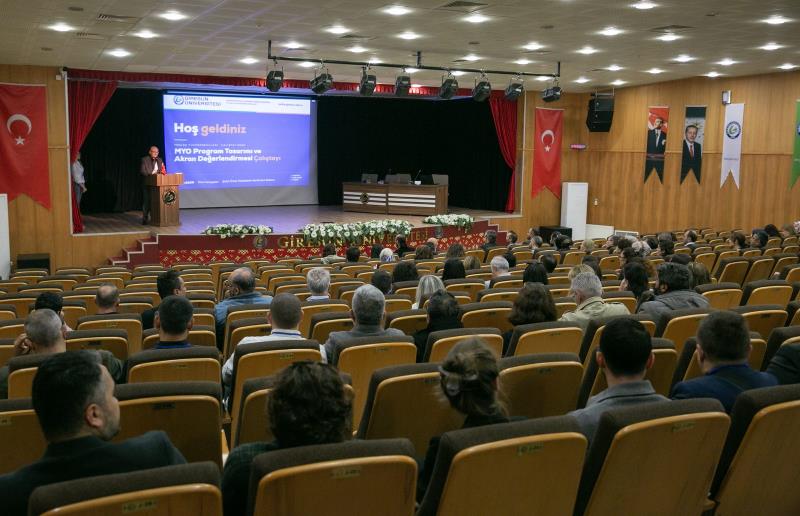
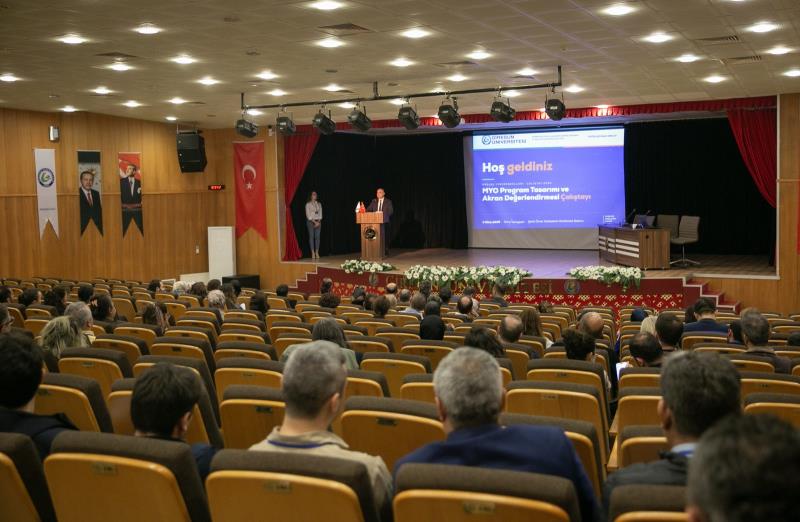
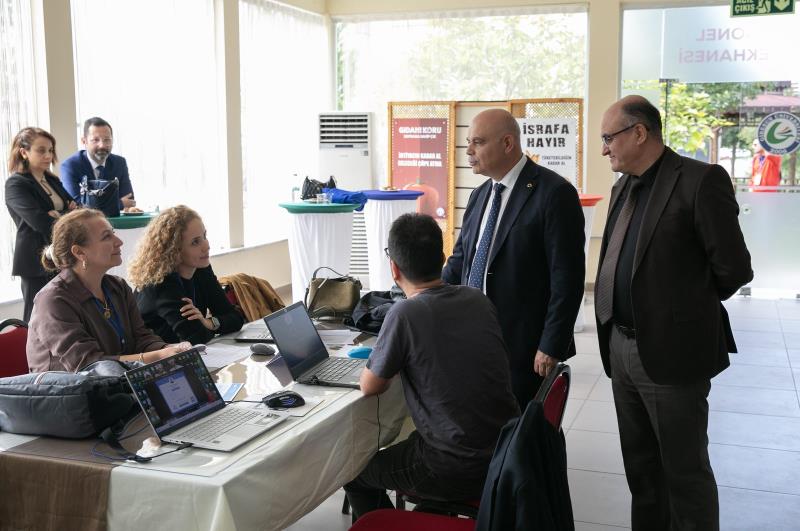
The “Workshop on Associate Degree Programme Design and Peer Review”, organised by our Coordinatorship with the contribution of the Coordinatorship of Vocational Schools, was held on Thursday, 8 October 2026 at the Güre Campus.
The workshop was attended by Acting Rector Prof. Dr. Güven ÖZDEM, Vice Rectors Prof. Dr. Emel UZUNOĞLU and Prof. Dr. Hüseyin ŞAHİN, Chief Advisor to the Rector Prof. Dr. Mustafa ŞANAL, members of the Quality Commission, directors of vocational schools, heads of departments and programmes, academic staff and external stakeholder representatives.
The workshop marked the closing step of the four-stage process our Coordinatorship has carried out with the vocational schools this year. Within this process, all units were visited and expectations regarding programme design were shared, course information packages were monitored, instructions on the measurement of programme outcomes were issued, and findings concerning ECTS – workload consistency were communicated to the units in official letters. The workshop examined the extent to which this feedback has been addressed, this time through programmes reviewing one another.
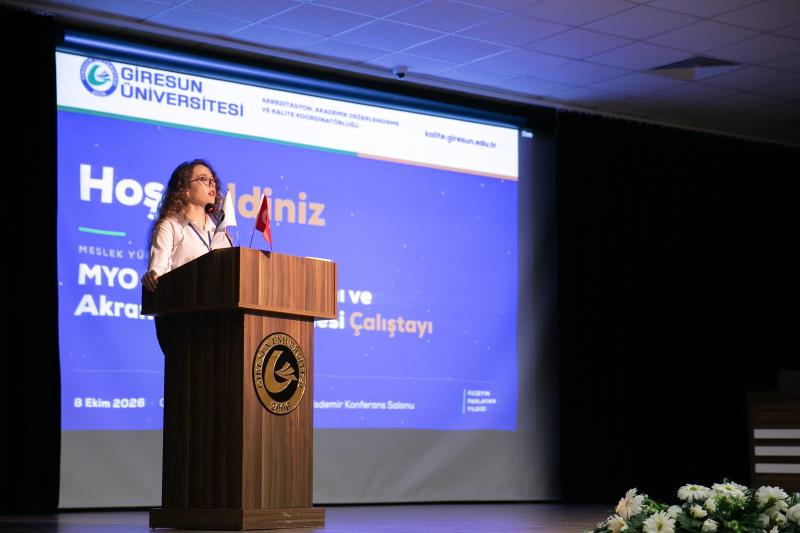
The morning session, held at our University’s Şehit Ömer Halisdemir Conference Hall, was moderated by Lect. Şevkiye BABACAN of our Coordinatorship. Delivering the opening address, Chief Advisor to the Rector and our Coordinator Prof. Dr. Mustafa ŞANAL discussed the place of the workshop within the quality assurance process, the importance of vocational schools for our University and the gains of programme and institutional accreditation, thanking everyone who contributed.
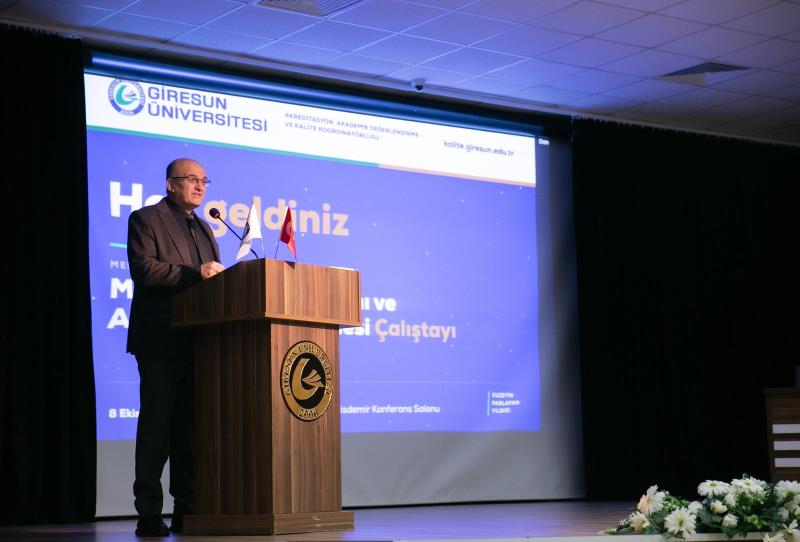
Stating that organising such a workshop on behalf of our University was significant, Acting Rector Prof. Dr. Güven ÖZDEM addressed the preparations carried out within the scope of the Institutional Accreditation Programme (IAP), the contribution of vocational schools to this process and the place of accreditation among our University’s priority objectives. ÖZDEM underlined the importance of sustaining the momentum gained in quality work and thanked the team of our Coordinatorship who prepared the workshop and everyone who contributed.
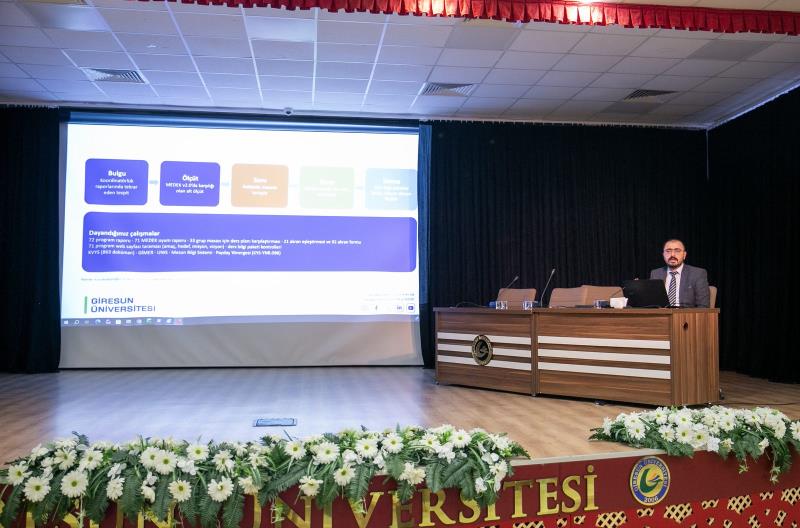
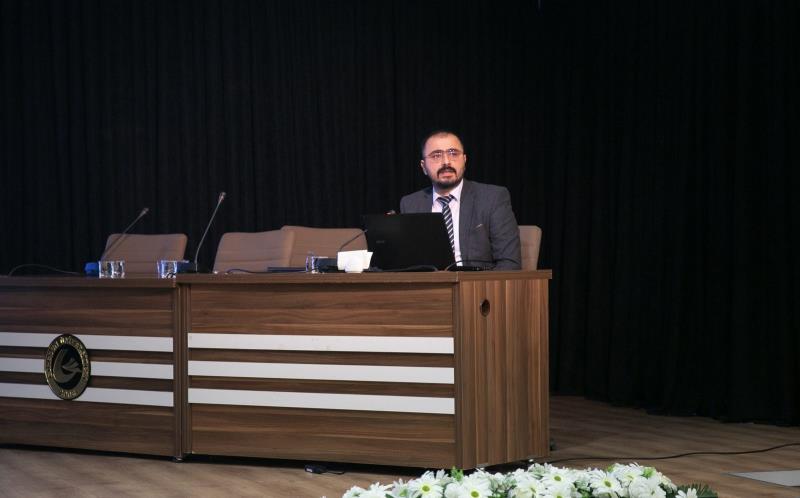
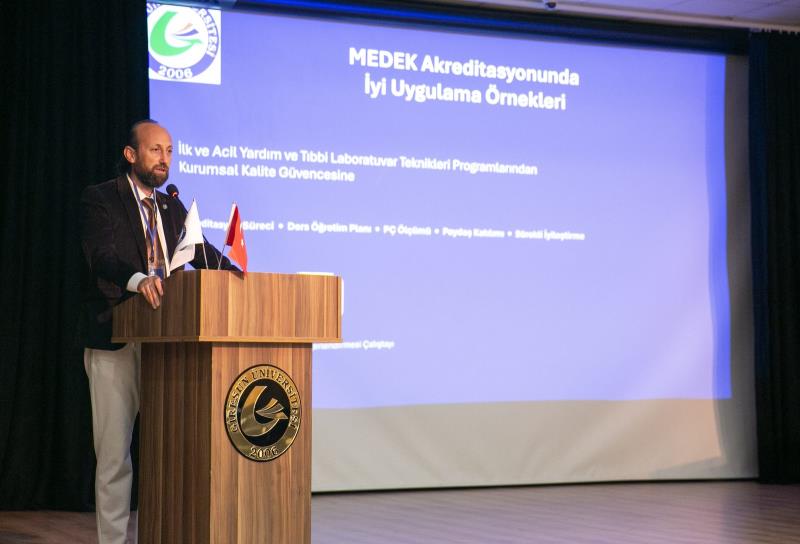
Following the opening addresses, Lect. Osman Serdal KARAPINAR, member of our Coordinatorship, delivered a presentation titled “From Reports to the Workshop: Issues, Criteria and Questions for Solutions”. The presentation shared our Coordinatorship’s findings on programme educational objectives, programme outcomes, curricula, stakeholder participation and continuous improvement, together with the questions to be addressed in the workshops. Coordinator of Vocational Schools and Director of the Vocational School of Health Services Prof. Dr. Aytaç GÜDER presented “Good Practice Examples in MEDEK Accreditation”, sharing the institutional quality assurance experience of the First and Emergency Aid and Medical Laboratory Techniques programmes.
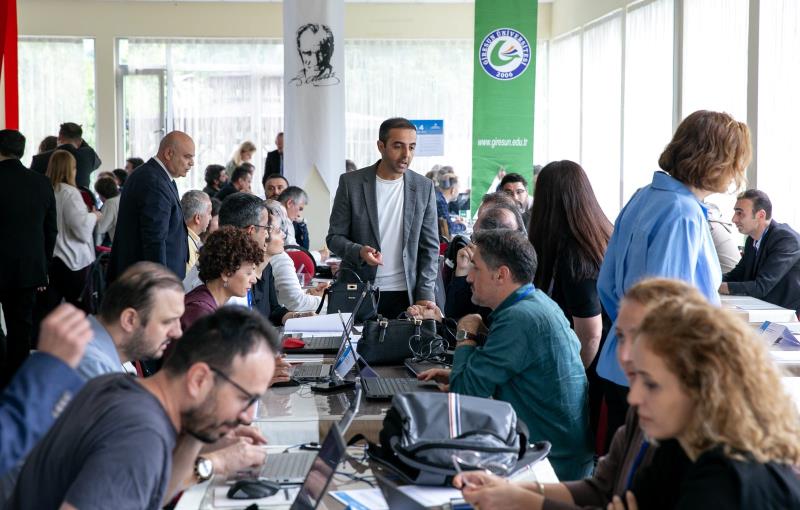
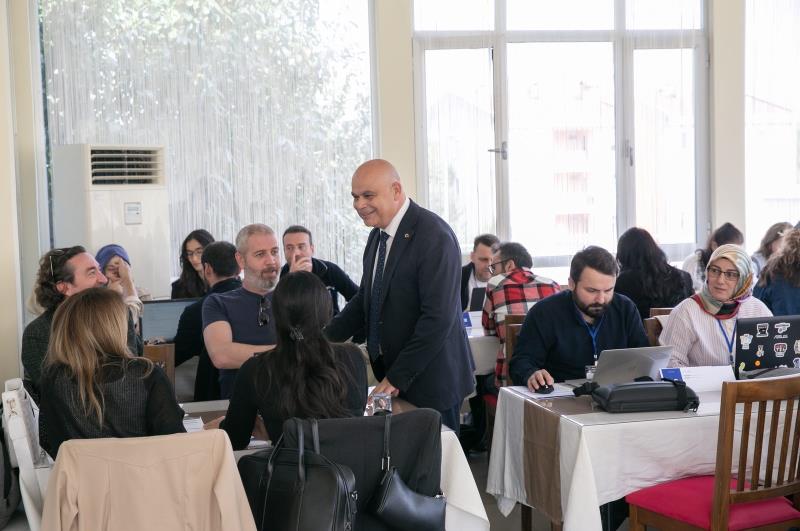
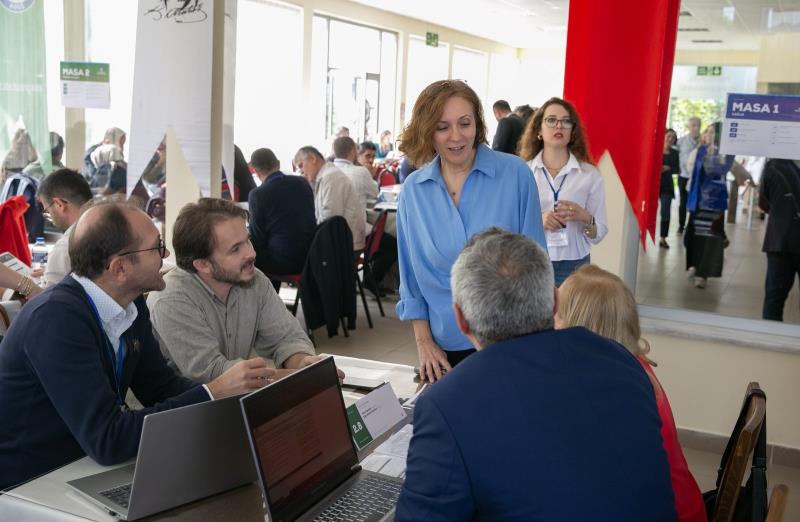
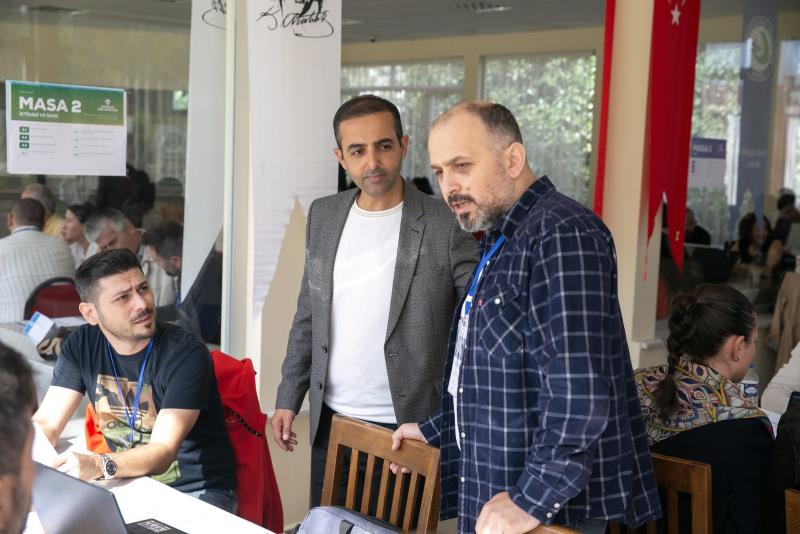
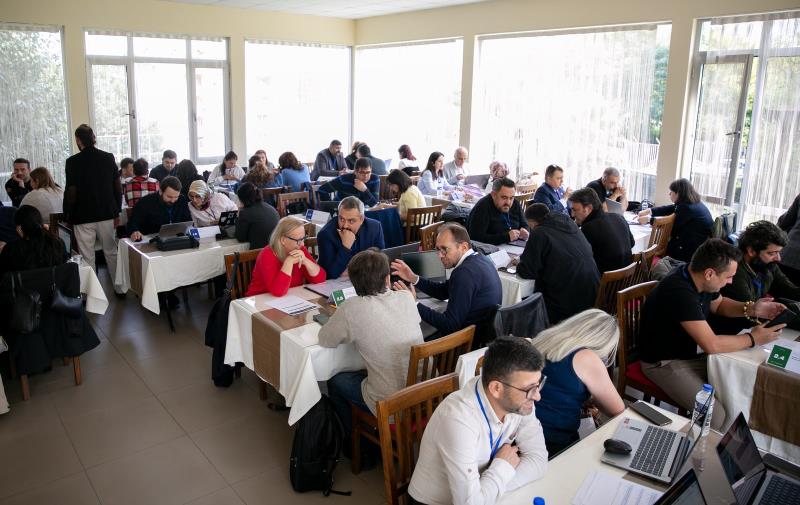
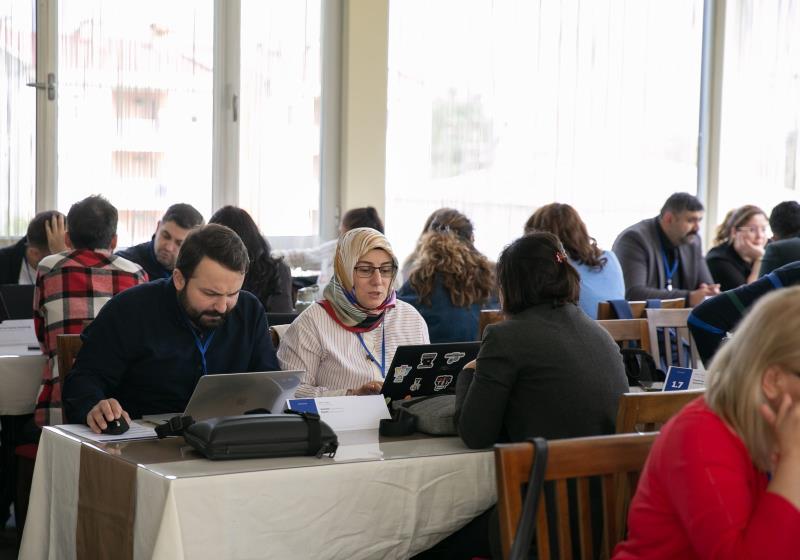
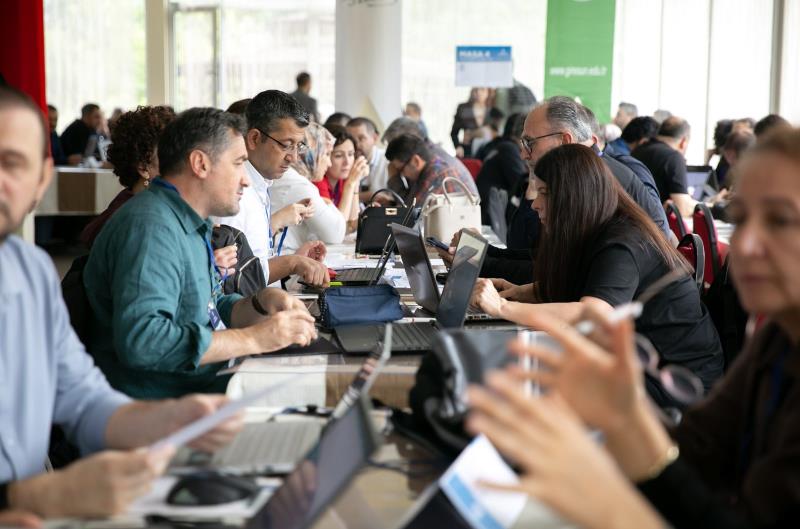
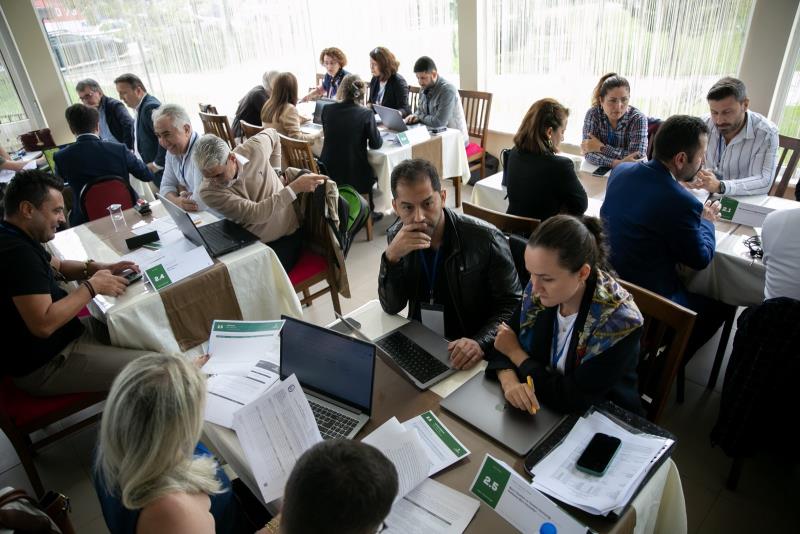
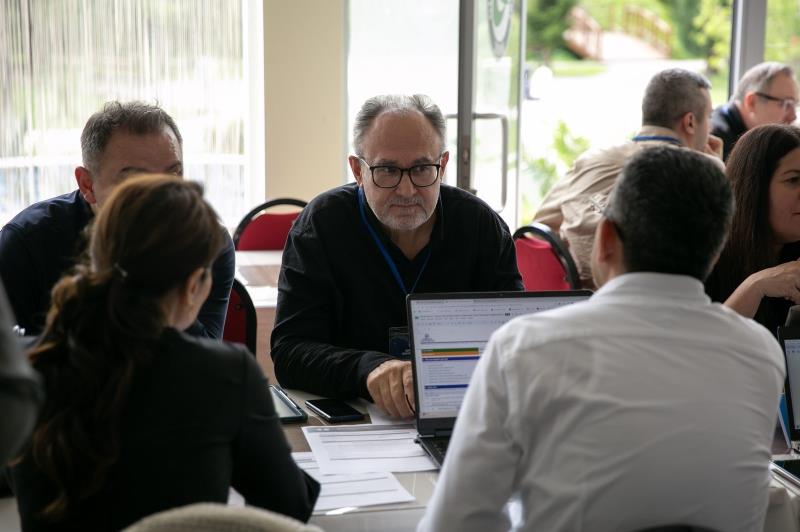
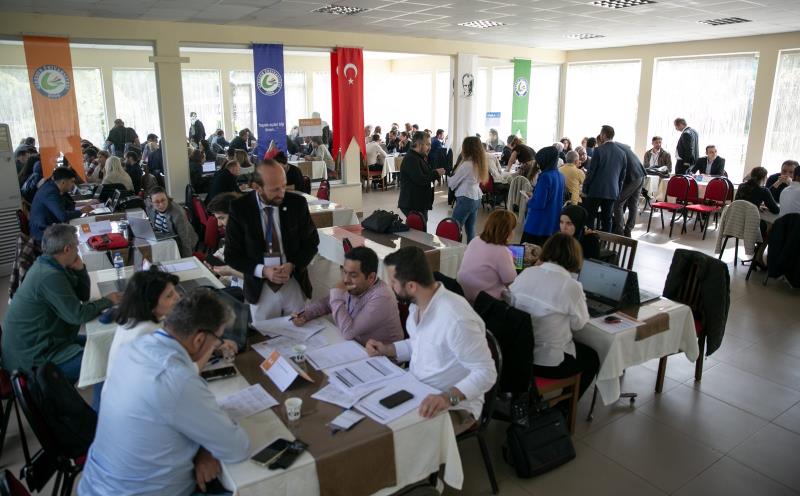
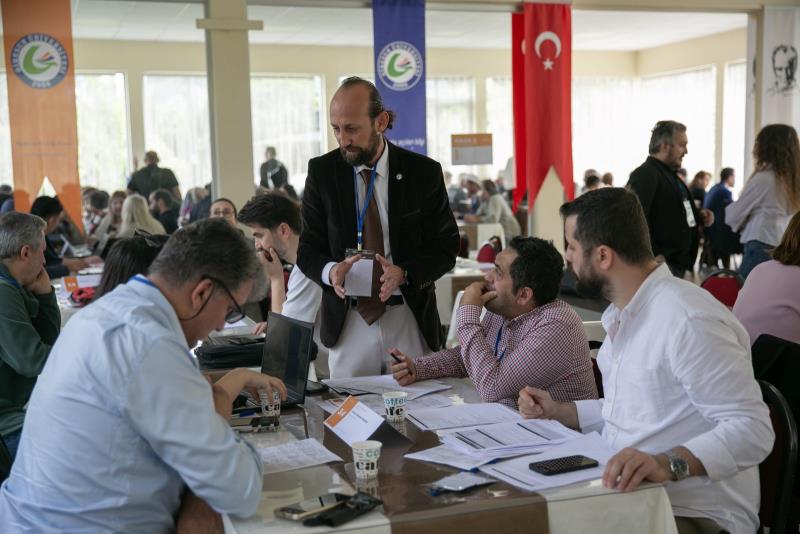
The afternoon workshops were held in the layout prepared at the Staff Dining Hall. According to Table 3 of the 2026 Higher Education Institutions Examination, the 72 associate degree programmes of our 11 vocational schools admitting students this year came together at four thematic tables – Health, Economics and Administration, Communication-Design-Tourism, and Technical-Informatics-Agriculture-Food – and at 33 group tables. Programmes offered at more than one vocational school compared their curricula in 12 joint programme groups, while programmes offered at a single vocational school reviewed one another in 21 peer pairings. A total of 92 peer reviews were completed among the programmes prior to the workshop.
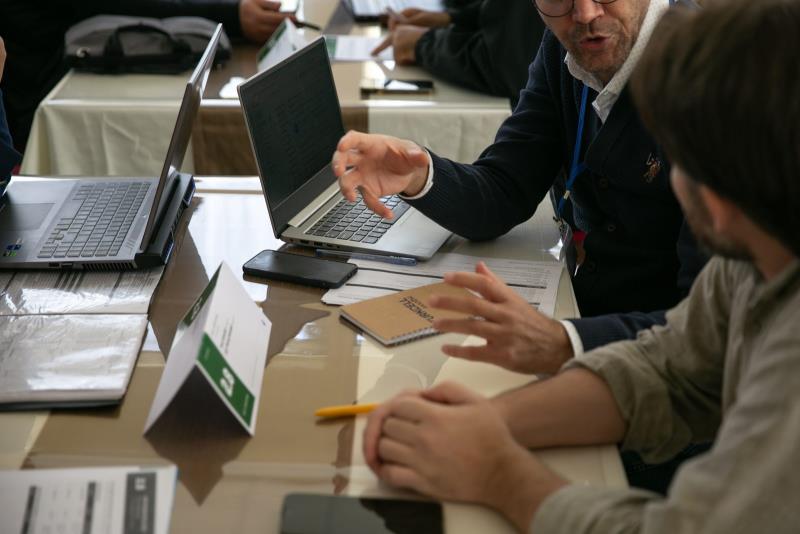
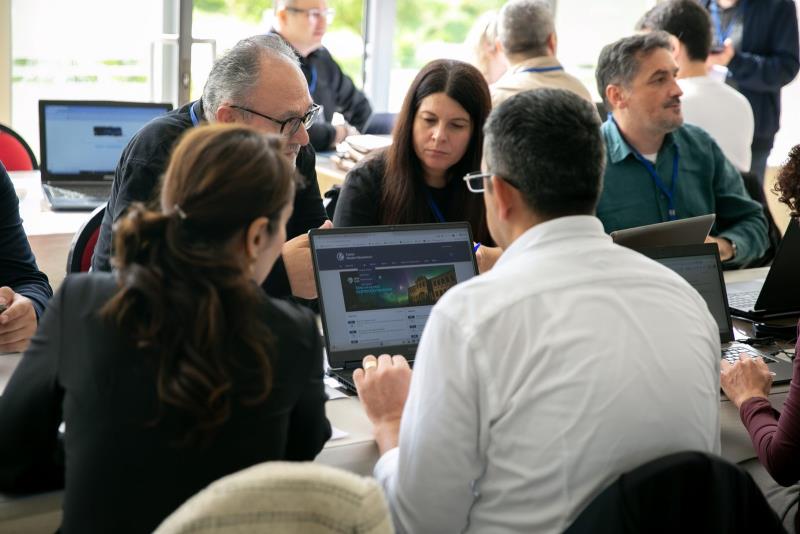
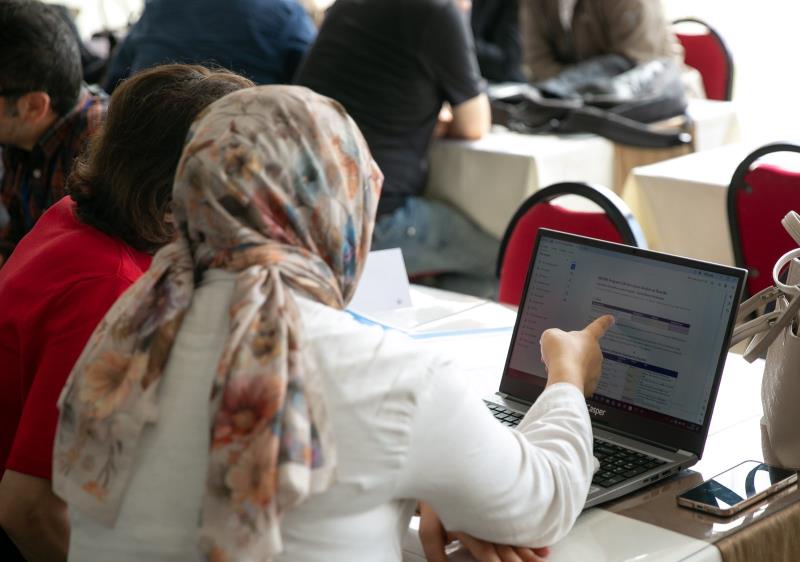
In the first workshop session, the groups discussed peer review results and curriculum comparisons at their own tables; external stakeholder representatives at the tables shared sector expectations and their views on curricula, programme outcomes, internships and in-company vocational training. In the second session, the groups at each table combined the shared strengths, areas open to improvement and stakeholder suggestions in their fields to prepare their table presentations. Participants worked devotedly throughout the day at the group tables assigned to them.
Expressing their satisfaction with bringing the programmes together at the same table, participants noted that the workshop strengthened coordination among units and provided a productive basis for sharing experience.
In the final session of the day, each programme determined the responsible parties and deadlines for the items left open, and each joint programme group did so for curriculum alignment, thereby drawing up their action plans. Group reports and programme action plans are expected to be submitted to our Coordinatorship by 15 October 2026.
The workshop outputs are intended to be translated into a feedback closure table for each programme, a curriculum alignment proposal for the joint programme groups, a MEDEK coverage matrix and programme action plans. The findings will be compiled in the workshop report to be prepared by our Coordinatorship and used as quality assurance evidence.