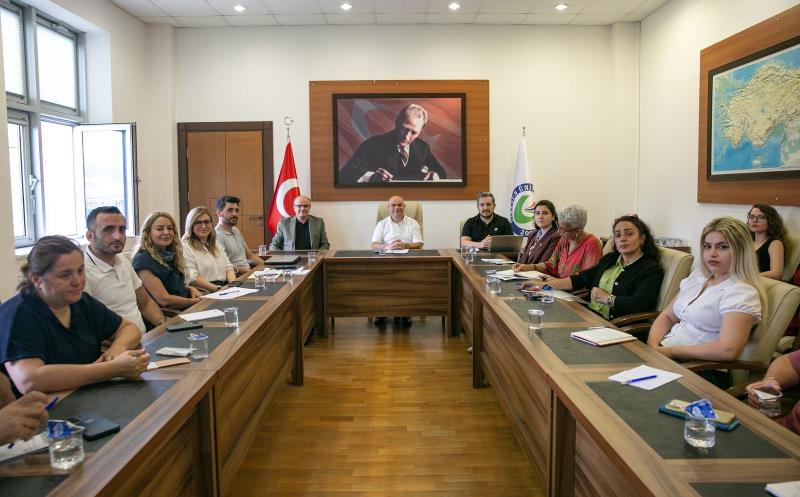
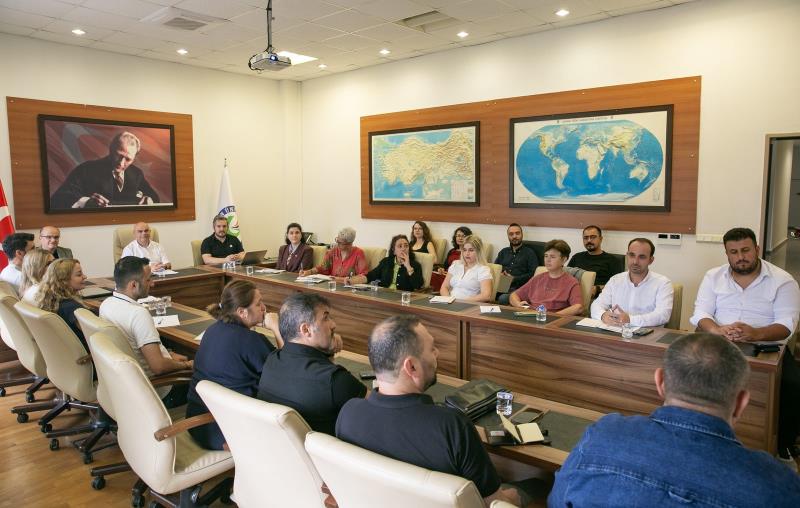
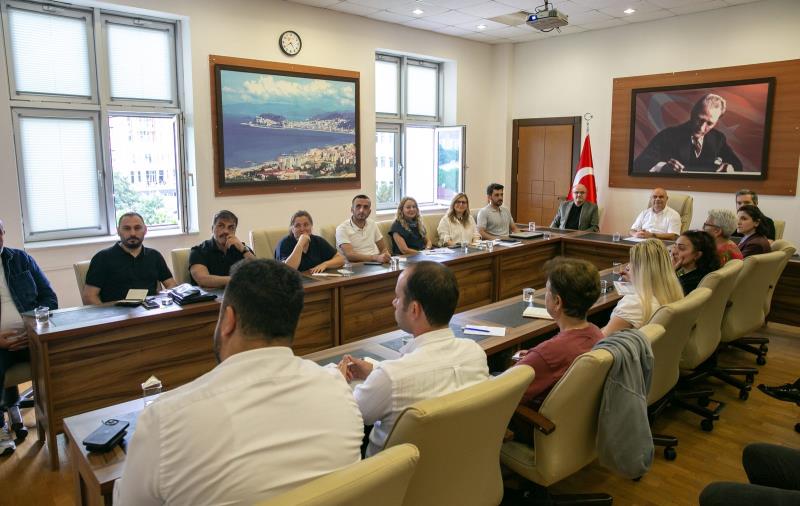
Preparations for the site visit to be conducted in November 2026 under the Institutional Accreditation Programme (IAP) of the Higher Education Quality Council (YÖKAK) are continuing at our University. Within this scope, a meeting was held on Monday, 21 September 2026 at the Rectorate Meeting Hall, with the participation of the directors of research and application centres and of coordinatorships.
Convened at the call of Vice Rector for Quality Prof. Dr. Güven ÖZDEM and organised by the Coordinatorship of Accreditation, Academic Evaluation and Quality, the meeting aimed to inform the units about the process and to ensure that preparatory work is carried out in coordination.
The opening recalled that institutional accreditation is an external evaluation covering the entire quality assurance system of the institution. During the site visit, the evaluation team also holds interviews with research and application centres, coordinatorships and support units. These interviews assess whether the processes conducted by the units are defined, whether the results obtained are monitored, and whether improvements can be demonstrated together with their evidence.
The presentation addressed the scope, evaluation areas and criteria structure of the Institutional Accreditation Programme, together with the YÖKAK rubric and the criteria sought in determining institutional maturity levels. It was emphasised that implementing a defined process corresponds to the third level, whereas measuring the outcome of that implementation and improving it with stakeholder participation corresponds to the fourth. This distinction illustrates what closing the PDCA cycle means in terms of institutional maturity.
The meeting also focused on the purpose of the questions posed during interview sessions and on the importance of building answers on evidence. Discussions covered how the process inventories of the units and their internal control and risk management practices are reflected in activities and in the strategic plan, and how records, decisions, reports and measurement results relating to unit activities are prepared and archived.
In closing, the pre-visit and site visit calendar and the next steps of the preparatory work were shared. In addition to the site visit, an online pre-visit will be conducted beforehand; its schedule will be shared with the units once it is confirmed.
The preparatory work carried out for the November 2026 site visit aims to establish a shared quality language across units, to extend an evidence-based working culture and to strengthen institutional memory.